Monday, March 31, 2008

Rainbow Mountain Wilderness- March 8, 2008


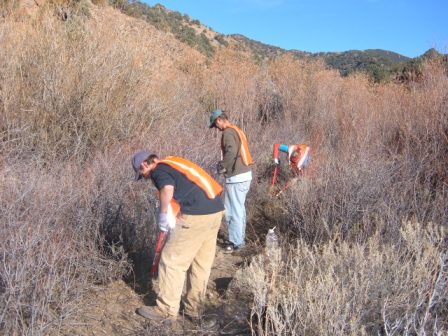
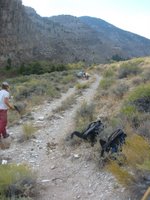
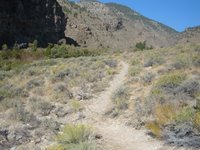
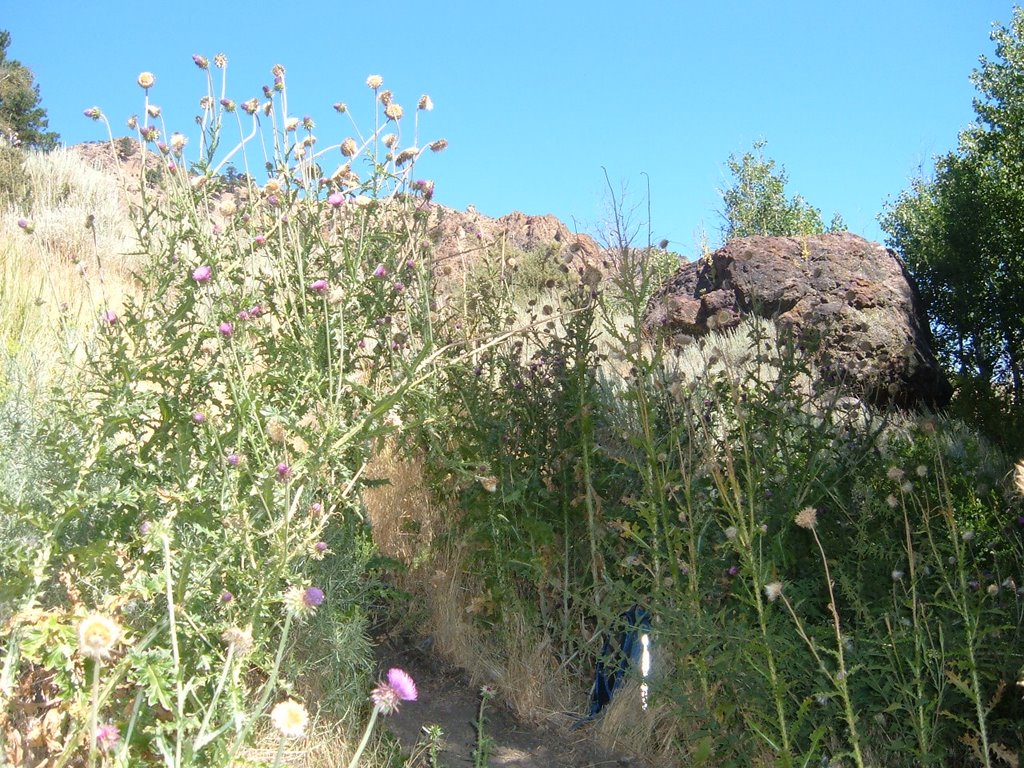
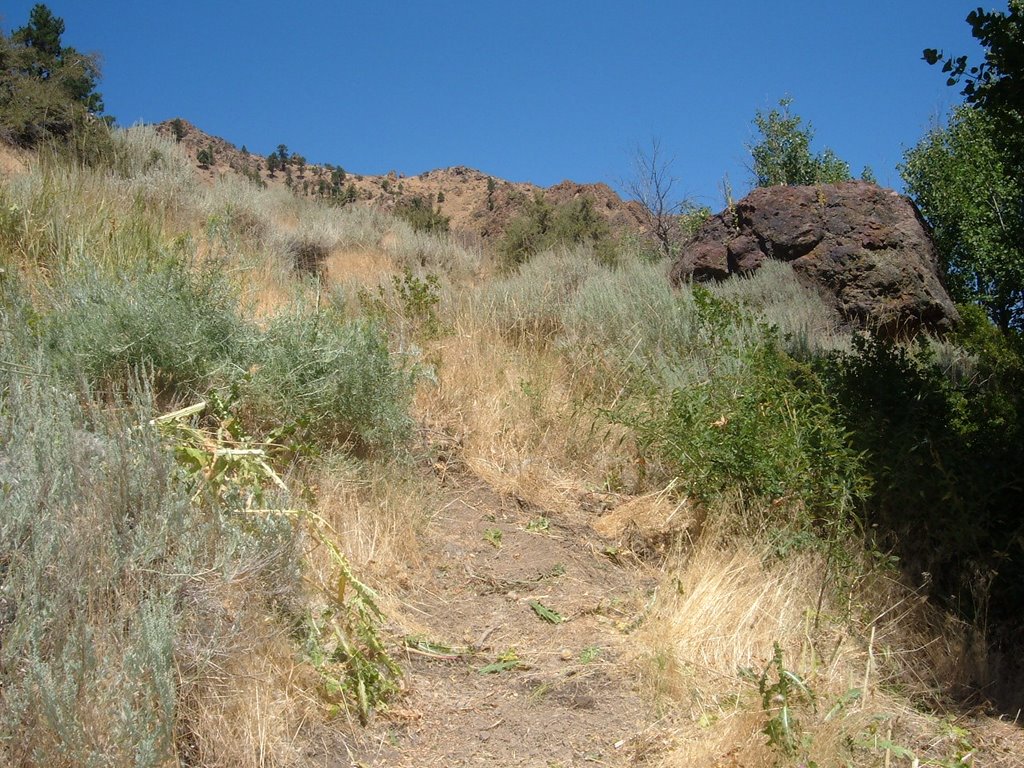
On Saturday, March 8th, Friends of Nevada Wilderness organized a volunteer restoration project with the Spring Mtn. NRA of the U.S. Forest Service. The project involved decommissioning an unauthorized route in the Mountain Springs area of the Rainbow Mountain Wilderness. There were a total of 9 volunteers present with Friends of Nevada Wilderness that participated on this project.

The crew began the day with a safety talk and sign-in, then drove up to the Wilderness boundary and set to work at the site. Boulders from the surrounding area were put in place behind the Wilderness boundary sign to help create a natural barrier. The volunteers went to work “pitting” the route (using pulaskis and pick mattocks) in order to decompact the soil to allow for seed collection and future growth. The volunteers also collected dead and downed plant materials to use for slash, and scattered it across the route to help disguise the scar.

The volunteers enjoyed the chance to get out and enjoy the Wilderness on a beautiful winter day in Southern Nevada while also working to restore the natural character of the land.


*There was a total of 54 volunteer hours recorded for this project.
*There was a total of $810.00 in-kind labor contributed on this project.

Wednesday, November 07, 2007

National Public Lands Day

Each year on the last weekend in September, thousands of Americans across the country come together to volunteer to give back to their public lands. Here in Nevada, Friends of Nevada Wilderness brought volunteers to two different NPLD projects- one in the High Rock Canyon country north of the Black Rock Desert, and one in the Boundary Peak Wilderness.

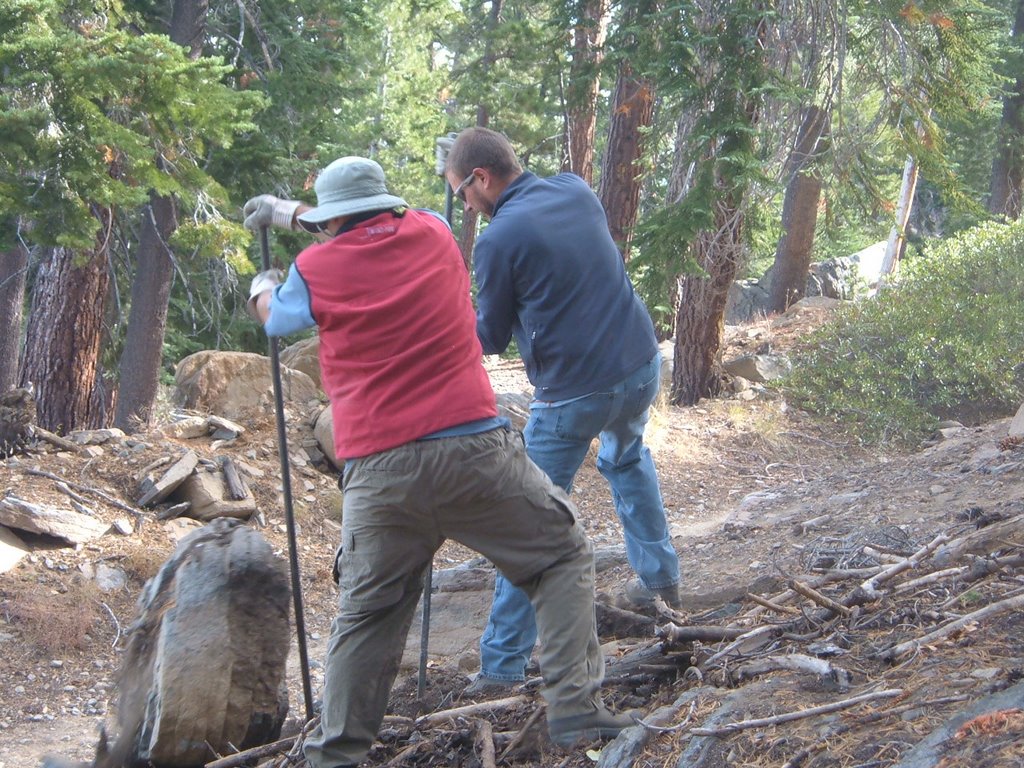
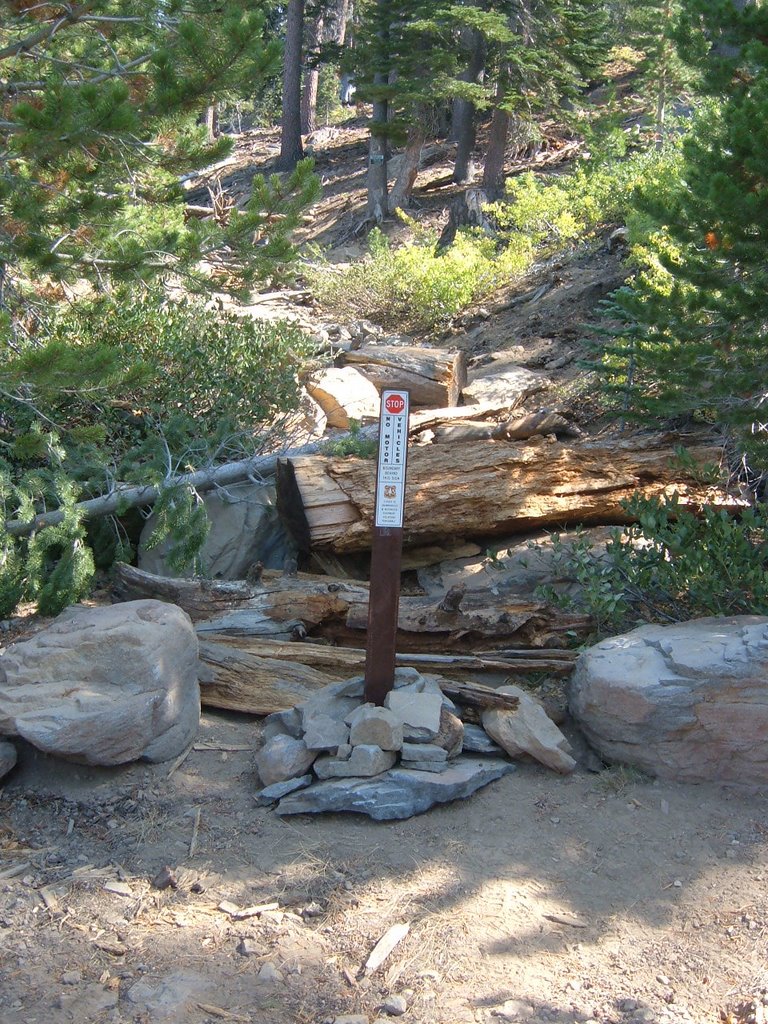
The Boundary Peak Wilderness is home to Nevada's highest peak, which sits at 13,141 ft. in the White Mountains near the California border. This fall, 25 Friends volunteers came out to help restore the Trail Canyon trail, the most popular trail visitors use to climb to the peak. The trail was in need of maintenance and a trailhead sign at the parking area outside of the wilderness. Volunteers also helped post barriers around the parking area at the trailhead to keep vehicles off a sensitive riparian meadow area.

After spending Saturday completing the trailwork along Trail Canyon, about half the group set out through the Wilderness to climb to the peak on Sunday. The group reached the top through 40 mph winds, experiencing an amazing view from the highest point in our state, and made it down safely.
*There were a total of 313 volunteer hours recorded for this project.
*There was a total of $4,695 saved through the use of volunteers that the U.S. Forest Service would otherwise have had to spend on in-kind labor. (Based on government protocol $15.00/hr)

Tuesday, September 18, 2007

Arc Dome Wilderness- September 8, 2007

Friends of Nevada Wilderness worked on restoring an illegal vehicular trespass along the beginning of the North Twin trail in the Arc Dome Wilderness. There were eight Friends of Nevada Wilderness volunteers and staff along with a Forest Service employee working on the project.

The volunteers camped at Spencer Hot Springs Friday night and met up with the District Ranger and seasonal employee of the Austin-Tonopah Ranger District Saturday morning at the project site. The crew scattered rocks and transplanted sagebrush and native plants from the surrounding environment along half of the two-track, leaving a single tread path open for hikers and stock. The rocks and vertical mulching helped to disguise the trespass, while also helping to speed up natural reveggetation and allow for seed collection. The volunteers were careful to totally avoid the archaeological sites, where there are old stone structures from many years ago. The volunteers worked transplanting native plants onto the route and scattering and placing rocks in a manner that would discourage motorized vehicles from trespassing, then placed a couple of carsonite signs. One sign was placed at the beginning of the trail where there is now an established turnaround and parking area for vehicles, indicating that from that point in the area is closed to motorized vehicles, and the other sign was installed further in to indicate the wilderness boundary.
After the route restoration work was completed, the volunteers hiked up the South Twin River trail to an old abandoned barbed-wire fence and removed the wiring and some of the posts. The wire and materials were left in a pile to be carried out safely at a later date.

*There were a total of 138 volunteer hours recorded for this project.
*There was a total of $2,070 saved through the use of volunteers that the U.S. Forest Service would otherwise have had to spend on in-kind labor. (Based on government protocol $15.00/hr)

Quinn Canyon Wilderness- August 4, 2007


Over the weekend of August 4th-5th, Friends of Nevada Wilderness performed a volunteer monitoring and restoration project in the Quinn Canyon Wilderness. The project involved assisting in monitoring efforts for invasive weeds and campsites in the wilderness along with trail maintenance along the Cherry Creek trail, which had not been maintained in years and had become inaccessible to visitors. There were six Friends of Nevada Wilderness volunteers and staff along with three Forest Service seasonal employees helping out on the project.
The volunteers arrived to the Cherry Creek campground Friday night and met up with the Forest Service Saturday morning. The volunteers split into three groups and accompanied the three Forest Service employees on different projects. One group went with April Johnson, the Forest Service Wilderness Ranger, to complete some monitoring work along the Hooper Canyon trail and along the boundary. The group documented and dismantled four different campsites, documented an invasive weed, and placed a couple wilderness boundary signs in needed locations. Another group went to find out if the Pine Creek trail existed and flagged and GPS’d the trail, which was in rough shape. The remaining volunteers joined Jim Proctor, Forest Service Trails Technician, to help clear the Cherry Creek trail of brush, excessive vegetation and downed logs. The trail work entailed pruning and lopping where the vegetation had crowded in the trail and also filling in some severely eroded and washed out sections of the trail where the creek had taken over. The Friends volunteers cleared the trail about 1/2 mile in to the wilderness, making it accessible for hikers and stock so that the wilderness resources can be protected from the creation of social paths and other negative impacts.


Volunteers worked to stop erosion of the trail along Cherry Creek.


The Friends of Nevada Wilderness volunteers and Forest Service employees enjoyed dinner and campfire that night, and the following morning a couple Friends volunteers continued with the trail work along Cherry Creek while the others were able to go for a hike through the Quinn Canyon Wilderness and enjoy the scenic views. There is still a large section of the Cherry Creek trail further into the wilderness that will need more maintenance work, but the Friends volunteers got a good start on the first section of the trail and will be back again to finish it off.


*There were a total of 156 volunteer hours recorded for this project.
*There was a total of $2,340.00 saved through the use of volunteers that the U.S. Forest Service would otherwise have had to spend on in-kind labor. (Based on government protocol $15.00/hr)

Alta Toquima Wilderness- July 28, 2007

On July 28th, Friends of Nevada Wilderness organized a volunteer restoration project in the Alta Toquima Wilderness. The project involved restoring the Pasco Canyon trail, which had not been maintained in years and had become inaccessible to visitors. There were six Friends of Nevada Wilderness volunteers and staff along with two Forest Service employees helping out on the project.

The volunteers arrived to the trailhead Saturday morning and worked along the trail filling in severely washed out areas with rocks, brush and dirt, and pruning and lopping where the vegetation had crowded in the trail. The trail was completely grown over with wild rose and other vegetation in some places and the tread was barely visible. The Friends volunteers cleared the trail about ¾ of a mile in to the wilderness, making it accessible for hikers and stock so that the wilderness resources can be protected from the creation of social paths and other negative impacts. There is still a large section of the Pasco Canyon trail further in that will need some work, but the Friends volunteers got a good start on clearing the first section of the trail.

After a long day of hard work, half of the volunteers headed to the Spencer Hot Springs to relax and soak in the hot springs and camp for the night. The following morning, Friends provided transportation to visit the Toquima Caves and view some archaeological sites before the ride back to Reno. Thanks to the hard-working volunteers of Friends of Nevada Wilderness and the U.S. Forest Service, visitors will again be able to access the Pasco Canyon trail and enjoy the Alta Toquima Wilderness.


*There were a total of 104 volunteer hours recorded for this project.
*There was a total of $1,560.00 saved through the use of volunteers that the U.S. Forest Service would otherwise have had to spend on in-kind labor. (Based on government protocol $15.00/hr)

Friday, July 27, 2007

High Schells Wilderness Restoration Project

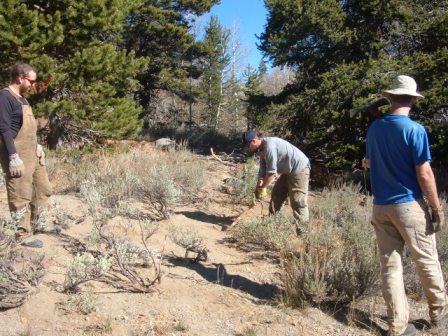
On July 14th, Friends of Nevada Wilderness organized a volunteer restoration project in the newly designated High Schells Wilderness. The project involved restoring an old two-track down to a single tread path along the South fork of Berry Creek. There were eight Friends of Nevada Wilderness volunteers and staff along with two Forest Service employees helping out on the project.

The crew arrived to the site and after a safety talk and sign-in, hiked up to the wilderness boundary and began the work. The volunteers collected logs and branches to use for slash, and scattered them across the route to help disguise the scar and define the trail. Using rock bars and manpower, the volunteers moved large rocks and boulders that had been placed in piles by the Forest Service for use on the project to block access by off-road vehicles while still allowing room for hikers and stock. A couple of water bars were also built in order to guide runoff away from the trail and prevent erosion. After the finishing touches were made, wilderness boundary signs and foot-travel only signs were pounded into the ground on Forest Service carsonites.

After a long day’s work, the Friends’ volunteers and Forest Service enjoyed dinner provided by Friends of Nevada Wilderness back at the campsite and relaxed while taking in the scenic views of the High Schells Wilderness. The volunteers enjoyed the chance to get out and experience this new Wilderness on a beautiful day in eastern Nevada while also working to restore the natural character of the land.


*There were a total of 147 volunteer hours recorded for this project.
*There was a total of $2,205.00 saved through the use of volunteers that the U.S. Forest Service would otherwise have had to spend on in-kind labor. (Based on government protocol $15.00/hr)

Monday, July 09, 2007

High Schells Wilderness-
Timber Creek restoration project

On June 9th, Friends of Nevada Wilderness organized a volunteer restoration project in the newly designated High Schells Wilderness. The project involved restoring an old jeep route along the North and South Forks of Timber Creek from a two-track down to a single tread trail. Friends of Nevada Wilderness partnered with the Rocky Mountain Elk Foundation to complete this project, and was also able to get a crew from the Nevada Conservation Corps, Great Basin Institute, to join in the efforts for the day. There were a total of 13 volunteers present for the project, including six Americorps volunteers with the NCC, five Friends of Nevada Wilderness volunteers and staff, and two Forest Service officers.

The crew arrived to the site and after a safety talk and sign-in, split into two to work on both the North Fork and the South Fork. Each group decided which tread to erase and which to keep as the hiking/horse trail, then set to work “pitting” the route (using pulaskis and pick mattocks) in order to decompact the soil to allow for seed collection and future growth of native plants. Dead and dying pine saplings (affected by beetle kill) were utilized for vertical mulching and to help delineate the trail. The volunteers also collected logs and branches to use for slash, and scattered it across the route to help disguise the scar and define the path. Using rock bars and manpower, the volunteers moved large rocks and boulders into the route to help block access by off-road vehicles while still allowing for hikers and horse travel. A couple of water bars were also built in order to guide runoff off of the trail and prevent erosion.

After a long day’s work, the Friends’ volunteers enjoyed dinner provided by Friends of Nevada Wilderness back at the campsite and relaxed while taking in the scenic views of the new wilderness area. The next morning a few of the volunteers went for a hike along the South Fork of Timber Creek up through Bristlecone Pines and a beautiful aspen grove, along the ridge, and joined up with the North Fork of Timber Creek where half of the volunteers had worked the day before. The volunteers enjoyed the chance to get out and enjoy this new Wilderness on a beautiful day in eastern Nevada while also working to restore the natural character of the land.

*There were a total of 169 volunteer hours recorded for this project.
*There was a total of $2,535.00 saved through the use of volunteers that the U.S. Forest Service would otherwise have had to spend on in-kind labor. (Based on government protocol $15.00/hr)

On June 2nd, Friends of Nevada Wilderness organized a volunteer restoration project with the Ely Ranger District of the U.S. Forest Service. The project involved restoring an old jeep route along the North Fork of Berry Creek in the High Schells Wilderness from a two-track down to a single tread trail. There were a total of 8 volunteers present with Friends of Nevada Wilderness and the Natural Resources Officer, Joshua Simpson, with the Forest Service.

The crew arrived to the site and decided which track to erase and which to keep as the hiking/horse trail, then set to work “pitting” the route (using pulaskis and pick mattocks) in order to decompact the soil to allow for seed collection and future growth of native plants. Dead and dying pine saplings (affected by beetle kill) were utilized for vertical mulching and to help delineate the trail. The volunteers also collected logs and branches to use for slash, and scattered it across the route to help disguise the scar and define the path. Using rock bars and manpower, the volunteers moved large rocks and boulders into the road to help block access by off-road vehicles while still allowing for hikers and horse travel. A couple of water bars were also built in order to guide runoff off of the trail and prevent erosion.

Along with rehabbing the two-track to a single tread path, the crew also hauled out two abandoned rusty culverts that had been sitting in Berry Creek for years. The first culvert was about 5 feet long, and the volunteers were able to remove it by clearing the debris out from inside it and simply lifting it out. The second culvert was about 15 feet long, and after assessing the situation, the volunteers figured out a way to haul it out using rope and branches to help as a ramp.

After successfully finishing the restoration work, the group also removed two unnecessary fire pits near the trailhead and located too close to the stream by dispersing the rings and removing the ashes and trash. They naturalized the area using surrounding plant materials so that it will recover and revegetate.

After a long day’s work, the volunteers enjoyed dinner provided by Friends of Nevada Wilderness back at the campsite and relaxed while taking in the scenic views of the newly designated High Schells Wilderness. The next morning the group went for a hike along the South Fork of Berry Creek, which leads through a beautiful aspen grove and up to another site where Friends will establish a trailhead in place of a two-track next weekend. The volunteers enjoyed the chance to get out and enjoy this new Wilderness on a beautiful day in eastern Nevada while also working to restore the natural character of the land.


*There were a total of 128 volunteer hours recorded for this project.
*There was a total of $1,920.00 saved through the use of volunteers that the U.S. Forest Service would otherwise have had to spend on in-kind labor. (Based on government protocol $15.00/hr)

Monday, March 12, 2007

Contact Us!

For more information on Friends of Nevada Wilderness, visit our website at:www.nevadawilderness.orgor call us at: (775) 324-7667

We also have a MySpace page!

Rainbow Mountain Wilderness


On February 21st and 22nd, Friends of Nevada Wilderness organized a volunteer restoration project with the Spring Mtn. District of the U.S. Forest Service. The project involved restoring an illegal route in the Mountain Springs area of the Rainbow Mtn. Wilderness. There were a total of 9 volunteers present with Friends of Nevada Wilderness, 3 Great Basin Institute Restoration Techs, and 5 employees from the Forest Service.

The crew began the day with a safety talk and sign-in, followed by a visit to a previous site completed by the Great Basin Institute to observe proper restoration techniques. The group then drove up to the Wilderness boundary and set to work at the first site. Boulders from the surrounding area had already been put in place behind the Wilderness boundary sign to help create a natural barrier. The volunteers went to work “pitting” the route (using pulaskis and pick mattocks) in order to decompact the soil to allow for seed collection and future growth. The volunteers also collected dead and downed plant materials to use for slash, and scattered it across the route to help disguise the scar. Because the site was located in a sensitive archaeological area, there was no vertical mulching or uprooting of live plants. The Forest Service provided mulch to distribute onto the site in order to help in seed collection and restoration.

The first day was spent entirely on one site; the next day was spent completing the first site and a second intrusion further down along the boundary. By the end of the second day, both sites were finished. The volunteers enjoyed the chance to get out and enjoy the Wilderness on a beautiful winter day in Southern Nevada while also working to restore the natural character of the land.


*There was a total of 180 volunteer hours recorded for this project.
*There was a total of $2,700.00 saved that the U.S. Forest Service would otherwise have had to spend on in-kind labor.

Friday, December 08, 2006

For more wilderness information:

For facts and information on wilderness ethics and management, wilderness news, and other volunteer opportunities around Nevada, check out the following sites:

http://wildmgr.blogspot.com

www.wilderness.net

Public Lands Institute http://publiclands.unlv.edu

Get Outdoors Nevada http://www.getoutdoorsnevada.org

Monday, November 20, 2006

Table Mountain- Barley Creek Trail Project

Friends of Nevada Wilderness organized a trail restoration project along the Barley Creek trail in the Table Mountain Wilderness during the weekend of November 4-5th. Friends transported and carpooled with four volunteers from Reno to the site, which was about 5 hours away.

The volunteers camped at the Spencer Hot Springs Friday night, and then continued on to the project site Saturday morning. The crew worked along the trail filling in severely washed out areas with rocks, brush, and dirt, pruning and lopping where the vegetation had crowded in the trail, and building rock walls where switchbacks were being cut and social paths were resulting in negative impacts on the wilderness resources. The crew began at the trailhead and worked about ¾ of a mile in to a point where the original trail had been completely submerged by the Barley Creek, due to a beaver dam that had flooded the area. A social path had already been formed along one side of the creek to avoid the flooded area, so the Friends volunteers concentrated on widening this path into the permanent tail, then joining back with the original path at a point where hikers and stock could easily cross the creek. The volunteers then blocked off the old section of the trail where access had been cut off due to the flooding and revegged this section so that it can eventually recover back into a natural setting.

After a long day of hard work, the crew successfully cleared the Barley Creek trail, filled in all the eroded washed out sections, and built a new trail around the flooded area and joining back with the original trail further down. The crew camped Saturday night outside the wilderness boundary, after enjoying a delicious veggie stir fry dinner provided by Friends, and then took off for the long drive back to Reno the following morning.

The weekend’s work produced very satisfying results. The Barley Creek trail is now restored and fully cleared of obstacles and brush. Thanks to the hard-working volunteers of Friends of Nevada Wilderness, visitors will now be able to enjoy this beautiful trail and appreciate a special part of Nevada’s public lands for many years.

* There were a total of 90 volunteer hours recorded for time spent on project and travel.

Monday, October 23, 2006

Mt. Rose- Hunter Lake Road Project


On Saturday, October 21st, Friends of Nevada Wilderness Forest Project Coordinator Angie Dykema and 6 Friends volunteers went up the Hunter Lake Rd. through Mt. Rose Wilderness to restore an area that had been impacted by illegal off-road vehicle trespass.The crew met at the Friends of Nevada Wilderness office at 6:30 in the morning and carpooled to the site in two vehicles, accessing the Hunter Lake Rd. from the Garson Rd. entrance out of Boomtown. There were three sites that needed restoration from illegal vehicle trespass into the north wilderness area, all located along the Hunter Lake Rd. The Hunter Lake Rd. divides the Mt. Rose Wilderness into two sections- the North and South.

Upon arrival at the first site, the crew hiked the illegal route up to the boundary sign, where it then continued past the sign well into the wilderness, in order to assess the damage and get an idea of the kind of restoration work that needed to be done.The crew set to work at the first site using the vertical mulching method, and also created natural barricades with fallen limbs and boulders from the surrounding area. While at work, the crew took note of about ten ATVs driving along the Hunter Lake Rd., a couple of which could be heard driving off-road a distance away.

After restoring the first intrusion site with sagebrush and other materials, the crew took a lunch break, and then went to work at the second site, which was down by the actual wilderness boundary sign. The crew inventoried a campsite at this spot and then dismantled the campfire pit, since it was only about 15 ft. from the Hunter Creek.

After hard work moving boulders and creating rock barriers on the route, the crew moved on to the last intrusion site and continued the restoration. Since there were no materials for revegging at this site, the crew placed logs and large rocks in the way to create obstacles and block access to the route from the Hunter Lake Rd.

After a long day’s work, the crew drove back down to Reno and enjoyed a delicious dinner provided by Friends of Nevada Wilderness. The new volunteers each received a Friends of Nevada Wilderness Warrior t-shirt and the second, third and fourth-time around volunteers each got a Nalgene water bottle with the Friends sticker. It was a very satisfying and rewarding project. The volunteers enjoyed the chance to get out and enjoy the wilderness on a beautiful autumn day while also working to restore the natural character of the land.

*There was a total of 80.5 volunteer hours recorded for this project.


Volunteers restoring an illegal vehicle route into Mt. Rose Wilderness along the Hunter Lake Rd.

Tuesday, September 26, 2006

Mt. Rose- road restoration project


On Thursday, September 21st, a crew of five volunteers from REI joined Friends of Nevada Wilderness’ Forest Project Coordinator Angie Dykema for a road closure project in the north section of the Mt. Rose Wilderness. The project entailed blocking off a vehicle intrusion extending from Forest Service Rd. 462C past the western boundary of the North Mt. Rose Wilderness and well into the wilderness area.

The crew noted the remains of a destroyed Forest Service carsonite sign at the entrance of the illegal road and replaced it with a new sign which clearly designates the wilderness boundary and displays “no motorized vehicles.” The crew then went to work rolling boulders and large logs into the two-track in order to block off access by off-road vehicles. Because the intrusion has occurred in a place where there is not much material available for revegging, the volunteers had to focus mostly on placing obstacles in the path to discourage future access.

The hard work of the volunteers paid off by the end of the day, when the two-track was so blocked off by logs and boulders and minimal vegetation that it was almost impossible to walk down. The crew successfully blocked all the visible portions of the intrusion, and all in all stopped access on about a half mile of the route. Motorized vehicles will be discouraged from trying to drive down this route again, and the wilderness will be left to heal from the motorized scar.

*There was a total of 51 volunteer hours recorded for this project.

Arc Dome- North Twin trailwork


Friends of Nevada Wilderness organized another project to finish up the trailwork along Arc Dome’s North Twin River Trail over the weekend of September 16th-17th. Friends transported two volunteers from Reno and met two other volunteers from Las Vegas at the trailhead.

The volunteers started working at the point along the North Twin trail where the previous Friends crew had left off a month earlier. The crew worked quickly and efficiently with the goal of connecting to where the Sierra Club service group had left off with their work almost a month earlier. After a long afternoon, the crew quit for the day and set up camp outside the South Twin trailhead. Friends provided dinner and transportation to the nearby Spencer Hot Springs in the northeast part of the Smoky Valley.

The following morning, after coffee and breakfast, the crew set to work again. They hiked all the way to the point where the Sierra Club had stopped working, in order to assess how much work was left. From that point, the crew began working backward toward where they had stopped the day before. There were a couple sections where the crew moved some rocks out of the trail and also along a stream bank for stabilization. There were numerous sections of the trail where the wild rose was very thick and overgrown, but the crew persisted and cleared the brush back from the trail, making it accessible for future visitors. Eventually, the volunteers found themselves at the point where they had stopped the day before, and with the satisfaction of a job well done, began the hike back to camp.

The weekend’s work produced very satisfying results. The North Twin trail work is now finished and fully cleared of obstacles and brush. Thanks to the hard-working volunteers of Friends of Nevada Wilderness and the Sierra Club, visitors will now be able to enjoy this beautiful trail and appreciate a special part of Nevada’s public lands for many years.


* There was a total of 94 volunteer hours recorded for this project.

Mt. Moriah- Hendry's Creek

<-- BEFORE

Friends of Nevada Wilderness organized a road restoration project along the Hendry’s Creek trail at Mt. Moriah over the weekend of September 9-10th. The project entailed restoring a two-track that began halfway down the Hendry’s Creek trail and led up to the wilderness boundary.

Two Friends volunteers left from Reno early Sat. morning with Friends’ Forest Project Coordinator Angie Dykema. After a seven-hour drive, the crew from Reno arrived at the site and met up with three other Friends volunteers from Ely, Friends’ Southen Nevada Conservation Director Susan Potts, and April Johnson from the Forest Service Ely Ranger District.

After a safety talk and a short hike out to the site, the crew of 8 set to work revegging the two-track back to a single tread path. After a few hours of work, the group went back to the campsite to enjoy a veggie stir-fry dinner provided by Friends. Susan and Angie talked to the volunteers about the current White Pine County public lands bill and encouraged letter-writing to the Senators. A hand-written letter was collected Sat. night and two other volunteers signed formatted letters.

Two volunteers had to leave Sunday morning to head back to Ely, but the rest of the group got up and was ready to go after enjoying breakfast. The remaining crew hiked the trail to the wilderness boundary and then set to work restoring the two-track. Although the entire site was not completely revegged during this project, the volunteers successfully covered up approximately 909 linear feet of the two-track. The efforts of Friends of Nevada Wilderness and volunteers will ensure that there are no future intrusions into the Mt. Moriah Wilderness from the Hendry’s Creek trail.


AFTER

*There were a total of 101 volunteer hours recorded for this project.

Tuesday, September 05, 2006

North Black Rock Range Wilderness, August 4-5, 2006


It's amazing what a few people can do with a little determination and muscle-power.

On August 5, I got the pleasure of covering for Pat, who was visiting family in Scotland, and participate in a restoration project in the North Black Rock Range Wilderness.

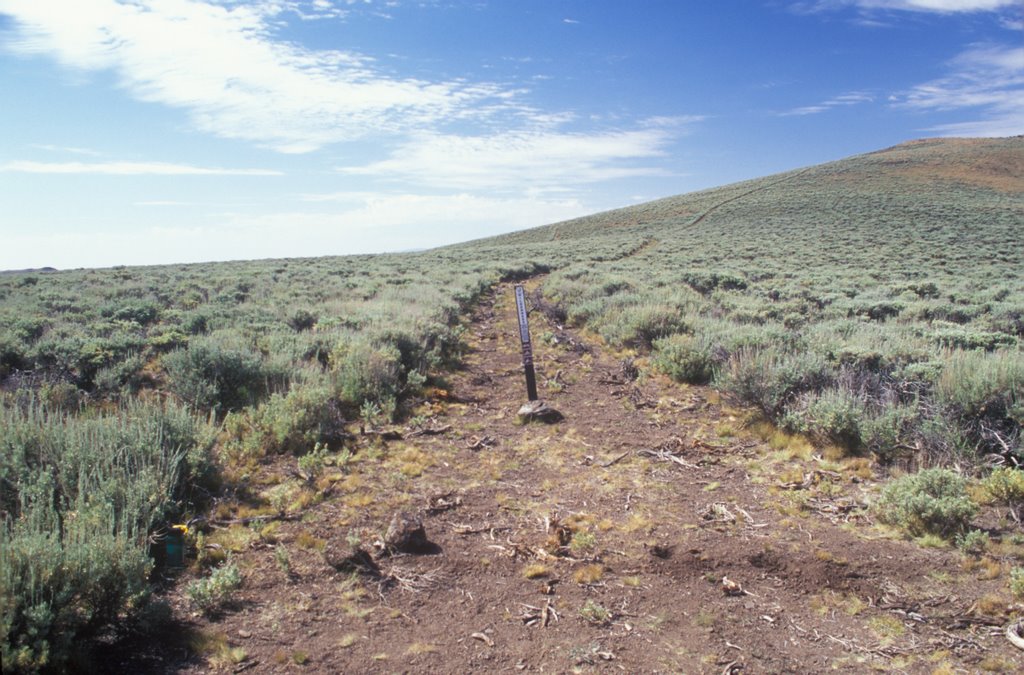
On a beautiful sunny day, with enough breeze to keep things from heating up, a total of 15 people, comprising volunteers, BLM staff, and an crew of international volunteers affiliated with the Nevada Outdoor School in Winnemucca, put to rest a three illegal vehicle routes in wilderness. The BLM's Brian Murdock, volunteer George Barnes, and I had restored the most aggregious route almost two years ago to the day, but it was quickly driven over during hunting season. This time we put a lot more work into it (having more people helps) to make sure the restoration work would stay.

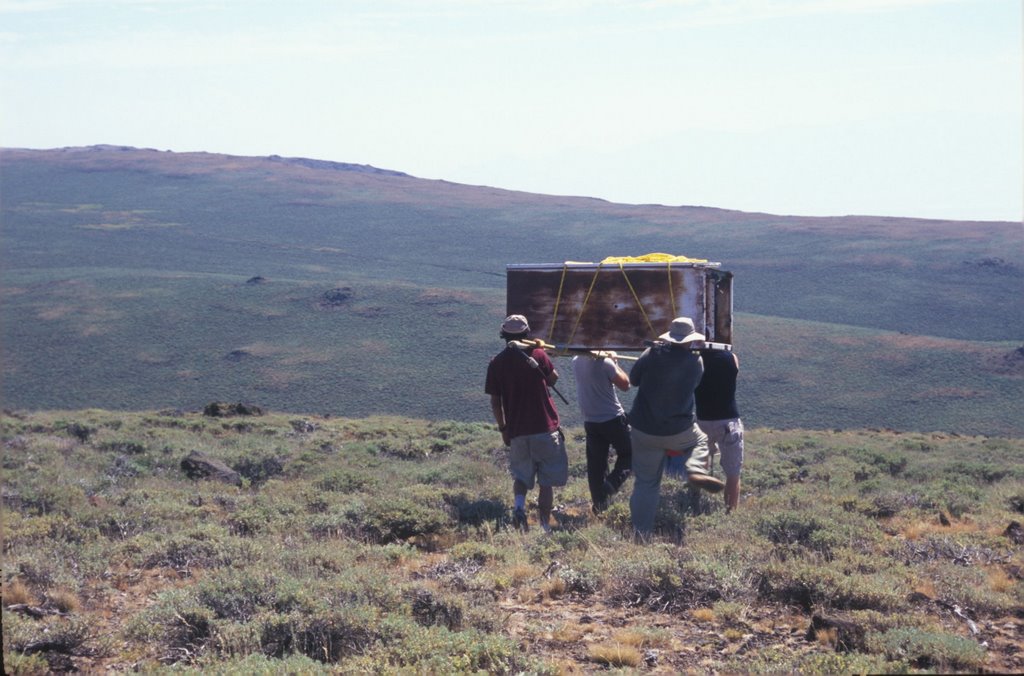
We also hiked out an old refrigerator from the peak of the North Black Rock Range, perhaps a mile from the boundary. It had served as a housing for radio equipment for a local rancher in the past, but it had long since become litter. We hiked it out.

Removing the refrigerator was nothing more than picking up litter, really. But it was deeply rewarding to be able to move this beautiful wilderness area somewhat closer to its original state. Now, anyone who hikes to that peak will say, "Wow, look at that view!" instead of "Jeez, what's a refrigerator doing up here?"

After a long good day of work, we drove back to our camp among the beautiful aspens of Lahontan Cutthroat Trout Wilderness Study Area and enjoyed a wonderful dinner of Tamale pie, fajitas, and Dutch oven apple crisp. Despite all the work that day, I think we ended up gaining weight.

It was a wonderful way to spend the weekend.

Brian Beffort
Associate Director
Friends of Nevada Wilderness

Thursday, August 31, 2006

Mt. Rose Invasve Weed Removal Projects


BEFORE


AFTER

As a result of the inventory/monitoring projects in Mt. Rose Wilderness, Friends and volunteers identified two sites along the Hunter Creek trail where an invasive weed had spread. The weed was Musk Thistle, a common invasive that grows between 4-6 feet tall.

The first infestation site took one project to successfully treat the area. The volunteers performed the work by lopping off the blooms of the weeds into large plastic bags. Each bloom of the Musk Thistle can produce 100 or more seeds. After collecting the blooms from each plant, the crew then pulled each plant by hand, including the short root system, to prevent further growth. Since the thistles simply wither up and die and cannot reproduce without the seeds from the blooms, the thorny stems were left away from the trail to die and only the blooms were bagged.

The second and larger infestation site spanned over three projects. This site covered the entire meadow located in the center of the north section of the wilderness area, which is about two to three acres. Although the entire site did not get finished before all the plants went to seed, the volunteers worked very hard and successfully removed hundreds of thistles over at least half the site.

A total of 8 volunteers participated in these weed removal projects and many trash bags full of thistle blooms were collected, representing thousands of seeds that would have spread and furthered the thistle infestation. Thanks to the hard work of these volunteers, Hunter Creek trail will no longer be covered by so many invasive weeds!

* There were a total of 97 volunteers hours recorded during these projects

Arc Dome North Twin trail project

On the weekend of August 5-6th, 2006, Friends of Nevada Wilderness did a trail restoration project along the North Twin trail in the Arc Dome Wilderness.

On Friday, August 4th, Friends of Nevada Wilderness Forest Project Coordinator Angie Dykema drove three Friends volunteers from Reno, NV to Austin, NV for the trail project in the Arc Dome Wilderness. The group camped at the Bob Scott campground outside of Austin on Friday evening and then regrouped at the Forest Service Ranger Station at 8:00 the next morning. After signing volunteer agreement forms and having a brief safety talk, the group set out to the North Twin Trailhead to begin the work.

The volunteers started working at the trailhead in toward the Werdenhoff Pasture, where the Sierra Club group had been staying for the previous week. The 13 Sierra Club women actually passed the Friends volunteers on their way hiking out of the wilderness on Saturday morning. The Sierra Club had finished about 7,685 linear feet of the North Twin Trail during the week they were there. The Friends volunteers worked hard over the weekend with the goal of getting close to the point where the Sierra Club group had left off.

The Friends volunteers worked hard from about 10:00am until 4:30pm Saturday, clearing large sections of the North Twin trail that were overgrown and hazardous for visitors. After a long day’s work, Friends provided a veggie stir-fry dinner and a trip to the Spencer hot springs located in the northeast Smoky Valley. After a relaxing soak in the hot springs and a good night’s rest, the group then set out Sunday morning to finish the trail work. The volunteers first hiked the entire trail to see the point where the Sierra Club had left off and to take in the beautiful scenic views. After the hike, the group put in a good couple hours worth of quality work before calling it a day and heading back to Reno.

Although there were only four volunteers on this project and a long stretch of brushing, lopping, pruning, and rock removal, the group worked hard and was able to successfully restore 4,488 linear feet of the trail. If left as it was, the North Twin trail in the Arc Dome wilderness would eventually have to be closed by the Forest Service due to overgrowth and neglect. Thanks to the hard-working volunteers with Friends of Nevada Wilderness and the Sierra Club, visitors will now be able to enjoy this beautiful trail and appreciate a special part of Nevada’s public lands for many years.

* There was a total of 204 volunteer hours recorded for the project over the weekend.

Friends of Nevada Wilderness

Friends of Nevada Wilderness